
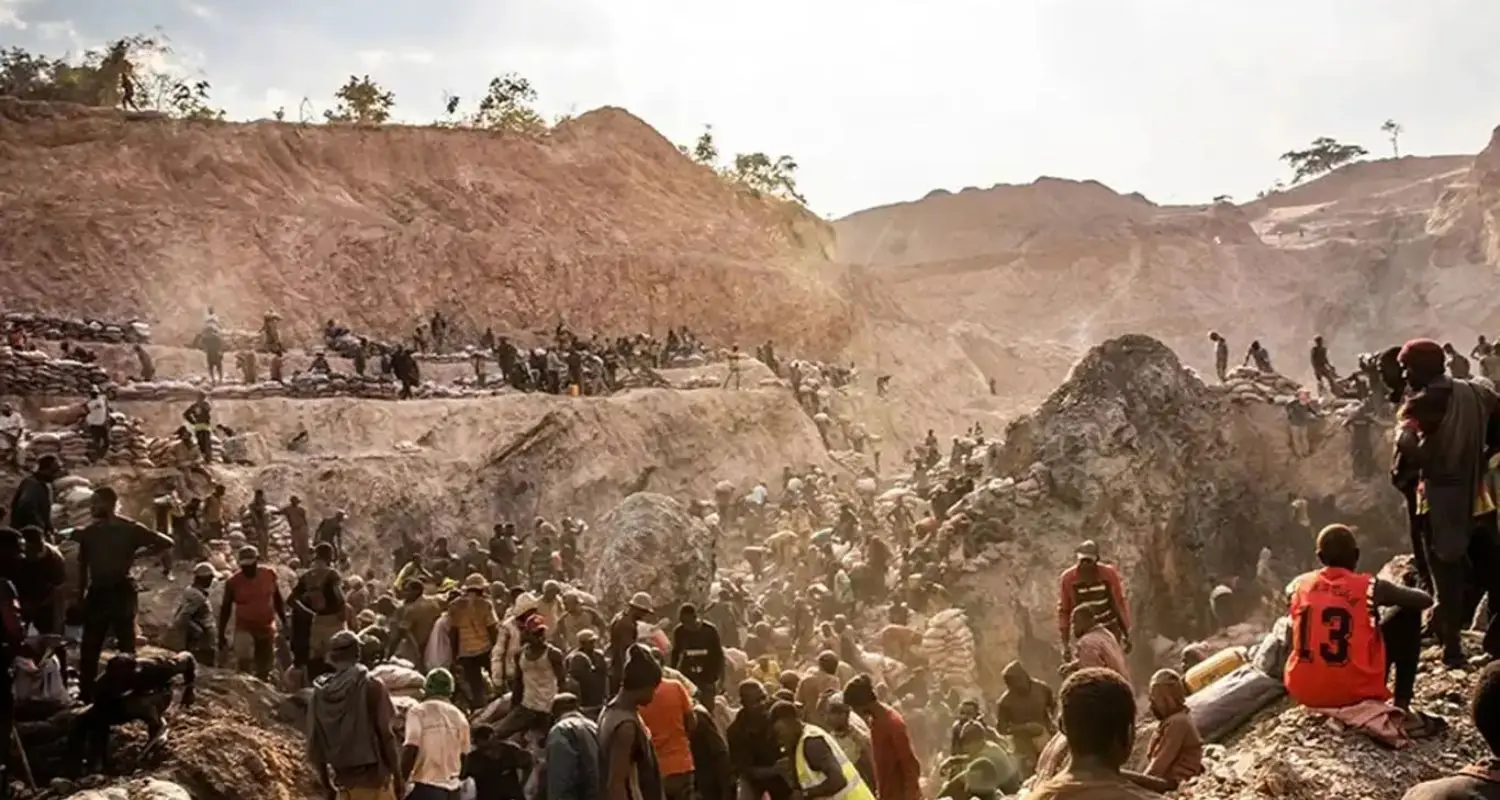
At least 200 people were killed earlier this week after heavy rains triggered a series of catastrophic landslides at the Rubaya coltan mine in eastern Democratic Republic of Congo (DRC), local authorities and witnesses have confirmed.
The Rubaya mine, a major source of coltan—a key mineral used in the production of smartphones, computers, and aircraft engines—has been under the control of the M23 rebel group since 2024.
“It rained, a landslide followed, and it swept people away. Some were swallowed up, others died in the wells. Many are still trapped inside,” said miner Franck Bolingo, describing the scale of the disaster.
A spokesperson for the rebel-appointed governor of North Kivu province, Lumumba Kambere Muyisa, confirmed that victims include miners, children, and market women. He added that at least 20 injured people are receiving medical attention, some at local health facilities, while others are being transferred to Goma, approximately 50 kilometres from the site.
Search and rescue operations are ongoing, and officials warn that the death toll is expected to rise as teams continue to scour the area for survivors.
In response to the tragedy, Governor Muyisa has temporarily halted artisanal mining at Rubaya and ordered the relocation of residents living in makeshift shelters near the mine.
Rubaya contributes roughly 15 percent of the world’s coltan supply. The United Nations has previously accused the M23 of exploiting the mine to finance its insurgency. The region of North Kivu, rich in minerals, has been a hotspot of violence for decades, with clashes between government forces and various armed groups.
Since its resurgence in 2021, the M23 rebel group has expanded its control over large areas of eastern DRC. Despite a U.S.-brokered agreement between the Congolese and Rwandan governments, and ongoing negotiations between Kinshasa and the rebels, fighting continues across several fronts in the region.
This latest disaster underscores the ongoing humanitarian and security challenges in eastern DRC, where artisanal mining remains a dangerous yet essential livelihood for local communities.









Comments (0)
No comments yet.
Only registered users can comment.
Sign in or create a free account to join the discussion.