



Accra, Ghana — History is the foundation of national identity. It shapes how a people understand their past and defines the principles that guide their future. In Ghana, the story of independence remains one of the most defining chapters of the republic. Yet, in recent years, debates have resurfaced over how that history should be remembered — and who should be credited as its central architect.
At the heart of this discussion stands Kwame Nkrumah, the leader widely recognized for mobilising the masses and declaring Ghana’s independence in 1957. While some perspectives advocate a broader interpretation of the country’s founding figures, others argue that diminishing Nkrumah’s singular leadership risks distorting historical clarity.
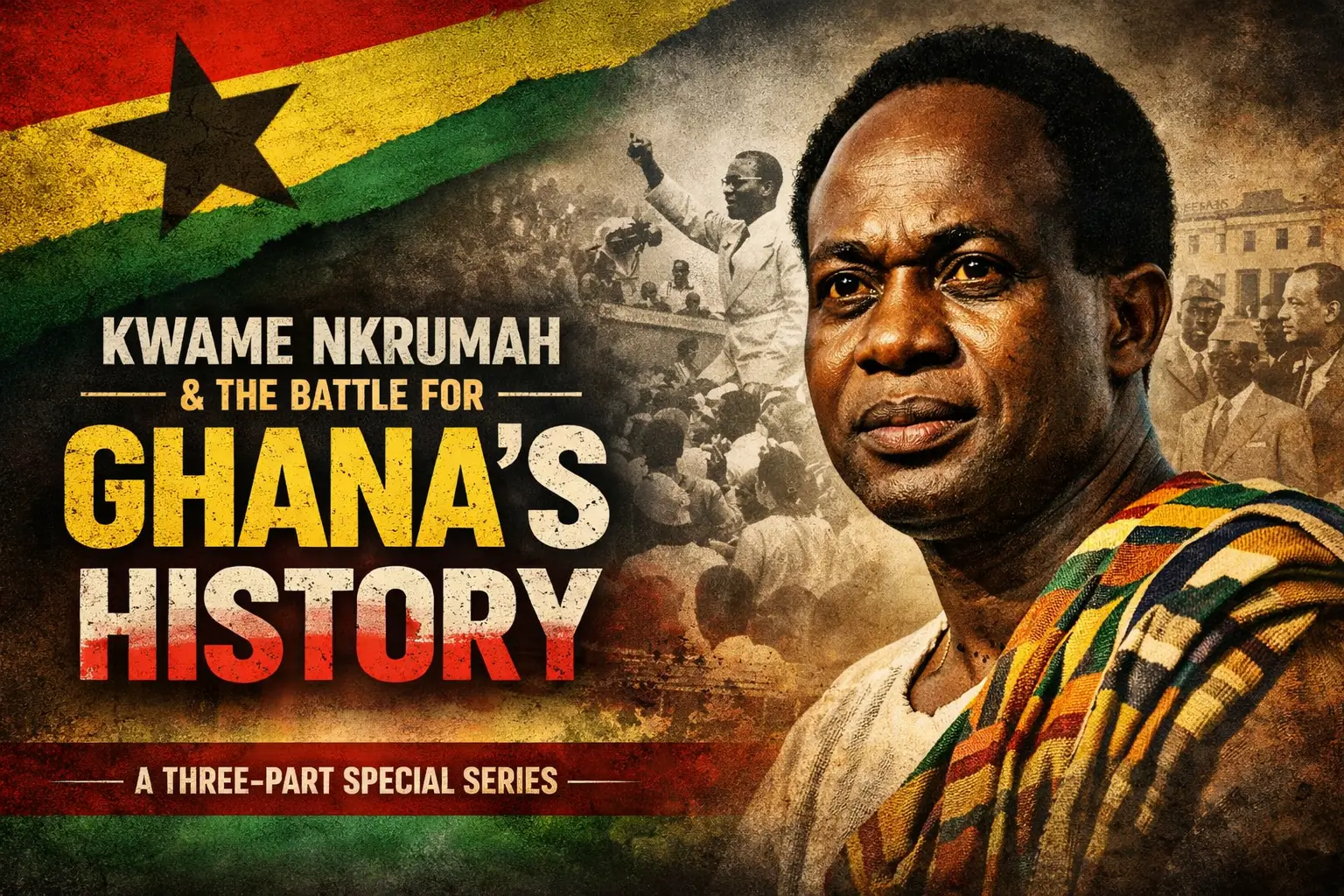
This three-part civic education series, Nkrumah and the Truth of Ghana’s Independence, examines the historical record with evidence, context, and analytical depth. Its purpose is not partisanship, but historical integrity.
What the Series Covers
Part I: Nkrumah’s Mass Mobilisation
An exploration of how Nkrumah transformed elite political agitation into a nationwide people’s movement. Through grassroots organisation, “Positive Action,” and the demand for “Self-Government Now,” independence shifted from aspiration to inevitability.
Part II: The Letters Against Independence
A documented look at petitions and correspondence by leaders of the United Gold Coast Convention, some of whom advocated a gradual transition rather than immediate independence. This section examines the political tensions that shaped the final push toward sovereignty.
Part III: The Independence Proclamation and Pan-African Legacy
An analysis of the 6 March 1957 declaration and how Nkrumah’s vision positioned Ghana as the first sub-Saharan African colony to gain independence in the post-war era. It also assesses his broader Pan-African ambitions and continental influence.
Why This Matters
The debate over Ghana’s founding narrative is not merely symbolic. It speaks to how democratic societies interpret leadership, sacrifice, and national struggle.
Supporters of the singular-founder interpretation argue that Ghana’s independence was ultimately driven by mass mobilisation under one decisive leader. Others contend that multiple actors contributed to the constitutional and political groundwork preceding independence.
This series examines these positions within their historical context, allowing readers to engage with documented evidence rather than rhetoric.
A Call to Readers
As Ghana continues to mature democratically, revisiting the foundations of independence is both necessary and healthy. Founder’s Day, observed on September 21, commemorates Nkrumah’s birth and his enduring role in Ghana’s liberation story.
Understanding the past with clarity strengthens national unity in the present.
This series invites readers to reflect, examine the historical record, and participate in a conversation grounded in facts and civic responsibility.
Comments (0)
No comments yet.
Only registered users can comment.
Sign in or create a free account to join the discussion.