
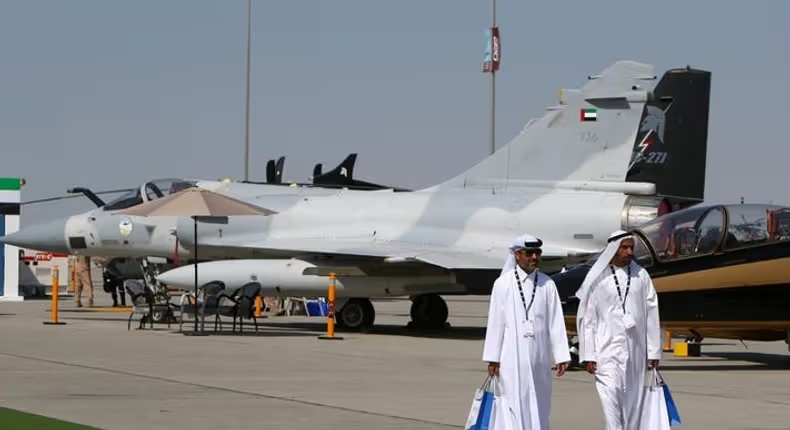
The United Arab Emirates (UAE) is preparing to phase out its Dassault Mirage 2000-9 fighter jets as it gears up to receive new Rafale F4 multirole aircraft from France, under one of the largest Rafale export deals ever signed.
In December 2021, Abu Dhabi sealed an estimated $18 billion agreement with France for 80 Rafale F4 jets and 12 military helicopters, marking a major upgrade of its air force. As deliveries of the Rafales are expected to begin around 2027, attention has shifted to the future of the UAE’s ageing Mirage fleet.
However, any transfer of the Mirage 2000-9 jets to other countries—particularly in Africa—cannot happen without France’s approval, in line with the original manufacturing and export agreements. This requirement effectively places Paris in a gatekeeping role over who benefits from the redistribution of advanced military aircraft on the continent.
Countries such as Morocco, Egypt, and Ethiopia have been mentioned as potential recipients of the retired jets. For Morocco, acquiring Mirage 2000-9E aircraft would significantly strengthen its air force, which already operates F-16 fighter jets and upgraded Mirage F1s. Such an addition would bolster Rabat’s capabilities amid ongoing regional security tensions, especially with Algeria, which maintains a sizable fleet of Russian-made combat aircraft.
Reports by Military Africa, LeDesk, and Army Recognition suggest that the UAE could transfer about half of its Mirage 2000-9E fleet to Morocco once Rafale deliveries are underway. While France is said to have given approval in principle, no official confirmation has been made as of early 2026, and any transfer remains tied to the Rafale delivery timeline.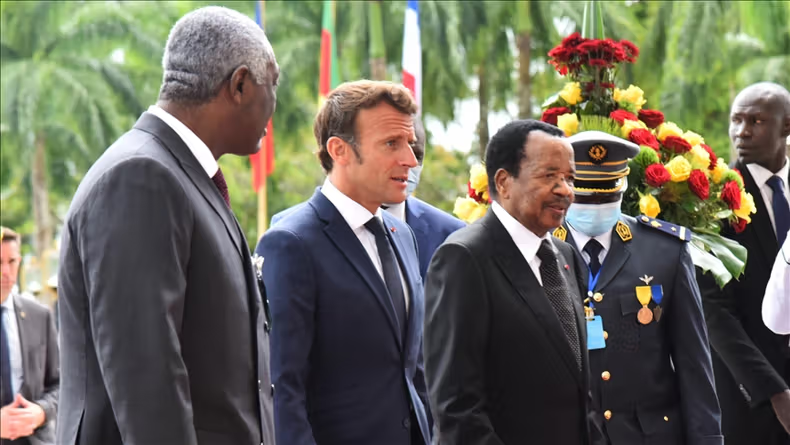
Beyond Morocco, Ethiopia has also expressed interest in modernising its air force to replace ageing Soviet-era jets. Although discussions involving Mirage or Rafale aircraft have surfaced in the past, no formal agreement has been reached, and no confirmed transfer plans exist. Still, these talks underline France’s continued influence in shaping African military modernisation.
Ultimately, while Gulf states like the UAE are emerging as important defence partners for African nations, France retains decisive control through contractual restrictions on aircraft transfers. This ensures that Paris continues to play a central role in determining which African air forces gain access to advanced combat platforms—reinforcing its long-standing strategic footprint across the continent.






Comments (0)
No comments yet.
Only registered users can comment.
Sign in or create a free account to join the discussion.