


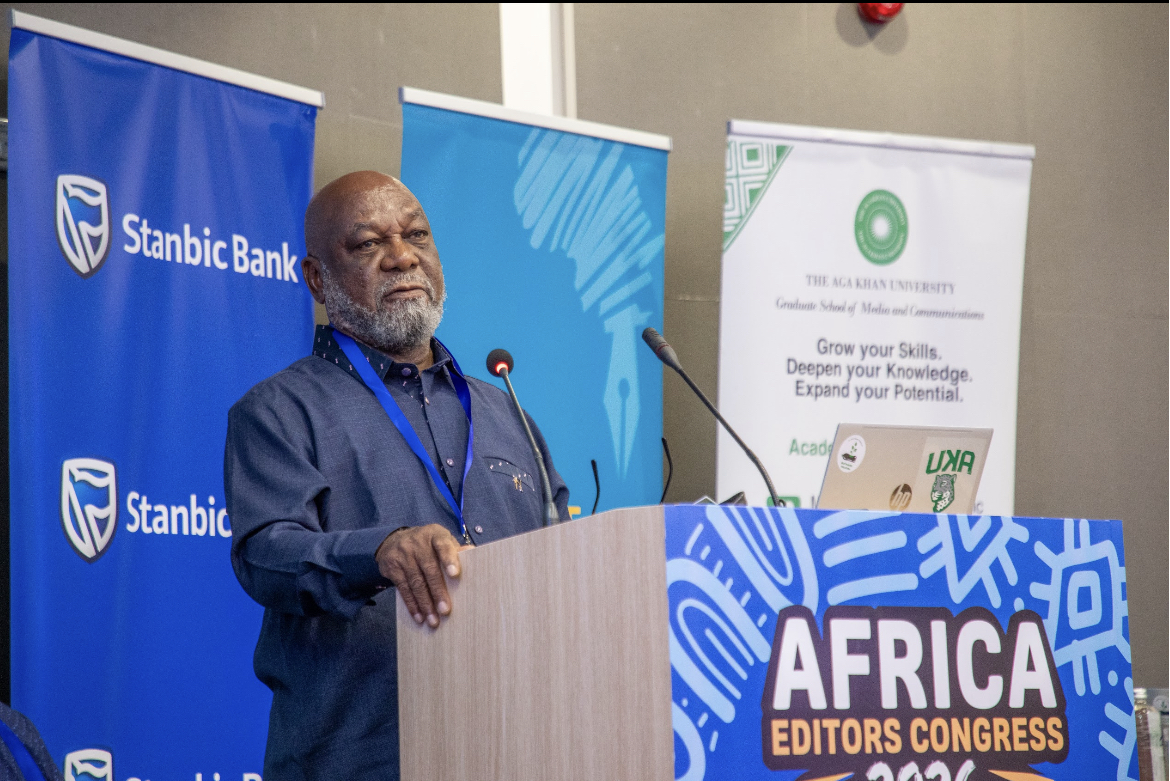
Prominent media scholar Kwame Karikari has warned that the resurgence of aggressive imperialism and a renewed scramble for Africa pose serious threats to the continent’s sovereignty and independence.
Speaking at the opening of the first Africa Editors Congress in Nairobi, Kenya, on Monday, February 23, 2026, Prof Karikari urged African editors to remain vigilant in the face of shifting global geopolitics that could undermine Africa’s stability and democratic gains.
A Collapsing Global Order
Prof Karikari, founder of the Media Foundation for West Africa, said rapid global developments have exposed what he described as the illusion of a stable post-1945 multilateral system.
According to him, international institutions, treaties and universal norms that once governed global engagement are increasingly giving way to disorder driven by brute force and disregard for weaker nations.
“This is an existential challenge for Africa,” he stated, warning that in a world where “might is right,” Africa remains the most vulnerable.
Warning Over New Imperialist Agenda
He referenced remarks made at the recent Munich Security Conference by U.S. Secretary of State Marco Rubio, which he characterised as signalling a revival of Western-led imperial dominance.
Prof Karikari said such rhetoric suggests a troubling nostalgia for colonial-era influence and control over resource-rich regions, particularly Africa.
In response to these developments, Ghanaian business magnate Sam Jonah reportedly wrote to the African Union (AU), cautioning African leaders about the dangers posed by renewed imperialist ambitions.
According to Prof Karikari, Sir Sam Jonah warned that Africa’s independence remains fragile in the eyes of some global powers and that exploitation continues through economic dependency, debt burdens and geopolitical manoeuvring.
Africa at the Centre of Global Contestation
Prof Karikari argued that Africa’s vast natural resources make it the epicentre of a 21st-century scramble involving former colonial powers, established industrial nations and emerging global actors.
“Our continent has once again become a hunting ground for global predators,” he said, questioning whether Africa is witnessing a new form of colonisation or an intensification of what Kwame Nkrumah described as neo-colonialism.
He described the emerging global order as the principal contradiction of the current era and called on African editors to prioritise educating citizens about its implications.
Conflicts Deepen Vulnerability
Beyond global geopolitics, Prof Karikari expressed concern about ongoing conflicts across the continent, citing crises in Sudan, South Sudan, and the Democratic Republic of the Congo (DRC).
He described the DRC as a tragic example of the “curse of natural wealth,” noting that its post-independence history has been marked by instability and violence.
He also warned about the spread of jihadist extremism across the Sahel region, where militant groups continue to destabilise communities and threaten peace in West and Central Africa.
Criticism of Continental Institutions
Prof Karikari criticised African leadership, arguing that the 54 member states of the AU have not demonstrated sufficient unity or decisive collective action to safeguard the continent’s interests.
He noted that the AU relies heavily on foreign donor funding for a significant portion of its budget, raising concerns about institutional independence. He further pointed to challenges confronting regional blocs such as Economic Community of West African States (ECOWAS), describing them as weakened amid growing political and security pressures.
According to him, the fragility of continental and regional institutions leaves Africa exposed at a time when global power dynamics are rapidly shifting.
Call to Action for African Editors
Prof Karikari concluded by urging African editors and media leaders to closely monitor global developments and play a proactive role in informing citizens about the geopolitical and economic forces shaping the continent’s future.
He stressed that the media must rise to the occasion by defending democratic values, promoting informed debate and safeguarding Africa’s sovereignty in an increasingly turbulent world.


Comments (0)
No comments yet.
Only registered users can comment.
Sign in or create a free account to join the discussion.