
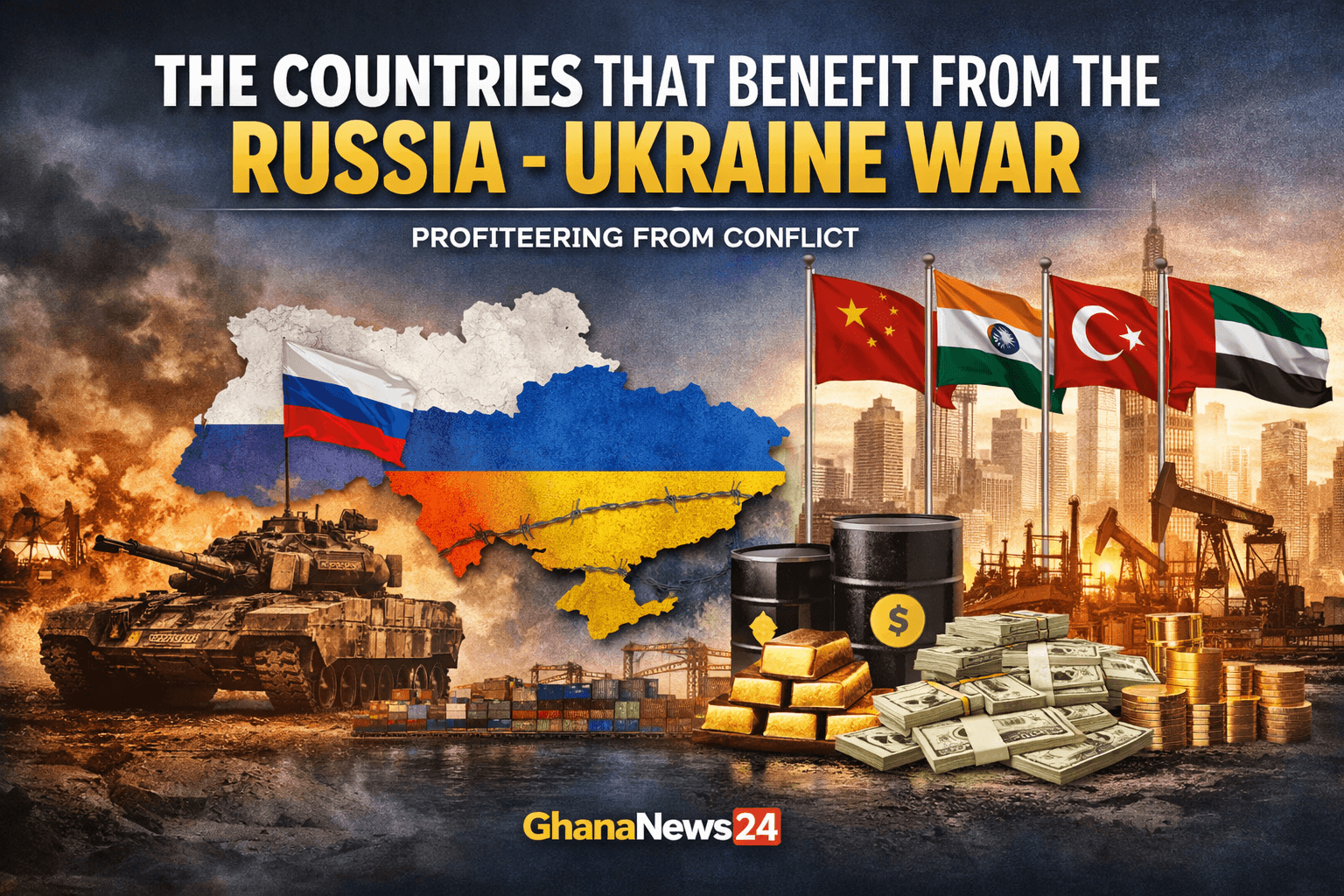
While the Russia–Ukraine war continues to devastate lives, cities, and economies, a different reality is unfolding behind the scenes of global geopolitics: some countries and economies are benefiting strategically and economically from the conflict.
As sanctions tighten around Russia and global trade routes shift, new financial corridors, energy alliances, and investment flows are reshaping the world order — creating unexpected winners in a war that has redrawn the global economic map.
Safe Havens for Russian Capital
In response to sweeping Western sanctions, many Russian nationals are relocating wealth and investments abroad as a way of protecting their assets from seizure, restrictions, and financial isolation. Countries outside Western sanction regimes have become financial safe havens, attracting Russian money into real estate, banking, energy, and private business sectors.
These investments are not just about profit — they are about financial survival and geopolitical insulation.
Analysts describe it as a “sanctions migration economy,” where capital flows away from the West toward politically neutral or strategically aligned states.
Countries Benefiting from the Conflict
China
China has emerged as one of the biggest strategic beneficiaries, increasing energy imports from Russia at discounted prices while strengthening economic and geopolitical ties with Moscow. The war has accelerated China’s influence in global trade routes and alternative financial systems.
India
India has significantly expanded its purchase of Russian oil and energy products at reduced prices, boosting its energy security and industrial growth while maintaining diplomatic neutrality.
Turkey
Turkey has positioned itself as both mediator and economic partner, benefiting from trade flows, tourism, logistics, and financial services linked to Russian capital inflows.
United Arab Emirates
The UAE has become a major destination for Russian investments, particularly in real estate, finance, and luxury markets, as Russian nationals seek stable, sanction-neutral environments for their wealth.
Central Asian States
Countries such as Kazakhstan, Uzbekistan, and Armenia have experienced increased trade volumes, financial activity, and logistics growth as alternative transit routes replace blocked European pathways.
The Energy Power Shift
Europe’s move away from Russian energy has opened new markets for energy exporters in Africa, the Middle East, and the Americas, creating new long-term contracts and investment opportunities. African gas and oil producers, in particular, are gaining renewed strategic importance in global energy security planning.
A New Global Economic Order
Experts argue that the war is not only a military conflict — it is a financial and geopolitical restructuring event. Traditional power centers are being challenged, while alternative alliances and trade systems are emerging.
“Sanctions have not isolated Russia from the world — they have redirected global economic flows,” a geopolitical analyst told GhanaNews 24. “What we are seeing is not isolation, but realignment.”
A Conflict Reshaping Global Power
The Russia–Ukraine war has created two parallel worlds:
One defined by destruction and humanitarian crisis, and another defined by strategic advantage, capital relocation, and economic repositioning.
For some nations, the war has become an opportunity to strengthen influence, grow markets, and expand global relevance — proving that in modern geopolitics, conflict does not only produce victims, it also produces beneficiaries.
As the war continues, the global balance of power is quietly shifting — not just on the battlefield, but in banks, ports, trade routes, energy markets, and investment hubs around the world.
This is no longer just a war in Eastern Europe.
It is a war reshaping the global system itself.




Comments (0)
No comments yet.
Only registered users can comment.
Sign in or create a free account to join the discussion.