
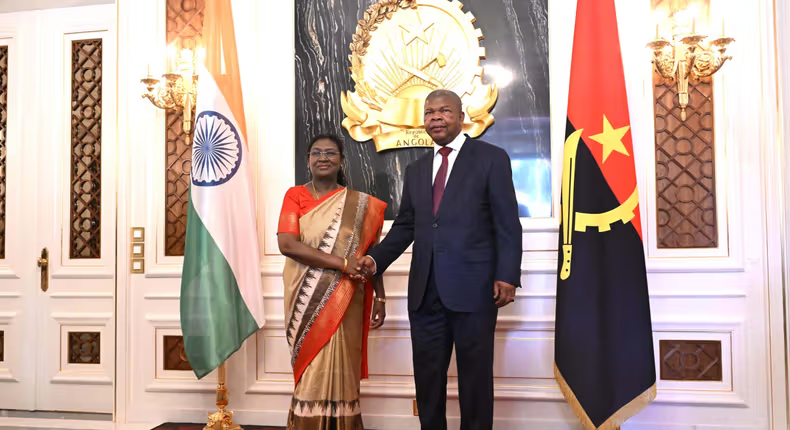
India’s largest refiner, Indian Oil Corporation (IOC), has purchased approximately 2 million barrels of crude oil from Angola for March delivery, signaling a major shift away from Russian oil and a deeper reliance on African and other global suppliers.
The acquisition includes 1 million barrels each of Angola’s Hungo and Clove crude grades, sourced from ExxonMobil. These medium-to-light sweet crude types are highly compatible with Asian refineries, offering high transport fuel yields and consistent quality, making them increasingly attractive to India and other major Asian buyers.
This purchase is part of a broader diversification strategy that also includes 1 million barrels of Abu Dhabi’s Murban crude, 2 million barrels of Upper Zakum from Mercuria, and 2 million barrels of Brazil’s Buzios grade from Petrobras, allowing India to balance supply, pricing flexibility, and delivery terms.
Reducing Dependence on Russian Oil
India’s move comes amid growing international pressure from the European Union and the United States to reduce Russian crude imports. While Russia had emerged as India’s top oil supplier following the 2022 Ukraine conflict—offering discounted barrels—recent sanctions and tighter oversight have prompted refiners to diversify supply sources.
Trade data indicate that India’s imports of Russian crude fell to a two-year low in December 2025, while purchases from OPEC members and African suppliers reached an 11-month high.
Angola’s Strategic Role
Angola, sub-Saharan Africa’s second-largest oil producer after Nigeria, currently produces around 1.1 million barrels per day. Its stable political environment, proven reserves of 7.78 billion barrels, and high-quality crude make it a vital partner for Asian refiners. The country has also been encouraging new investments in its mature offshore fields to maintain stable output.
By diversifying its crude sources, India aims to strengthen trade ties with the U.S. and EU, mitigate risks from sanctions exposure, and enhance energy security. Analysts note that rising imports from Africa and the Middle East could also support diplomatic efforts, secure favorable trade terms, and ease tariff pressures.
This strategic pivot underscores Africa’s growing role in global energy flows as countries like Angola emerge as key suppliers to major economies, particularly in Asia.




Comments (0)
No comments yet.
Only registered users can comment.
Sign in or create a free account to join the discussion.