







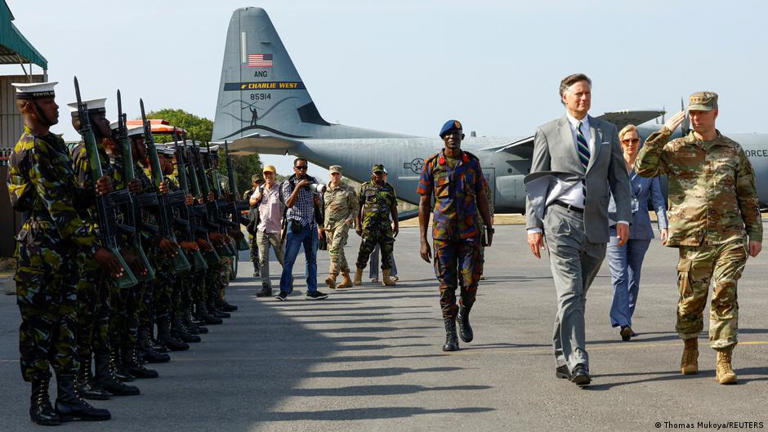
The United States is intensifying its diplomatic and strategic engagement in East Africa and the Red Sea corridor as Deputy Secretary of State Christopher Landau embarks on a week-long visit to Egypt, Ethiopia, Kenya, and Djibouti. The tour, running from January 24 to February 1, comes at a time of heightened geopolitical interest in the region.
According to the U.S. Department of State, Landau’s visit seeks to advance President Donald Trump’s priorities of “rebalancing trade, ensuring a positive business environment, and promoting security and peace.” For Landau, the trip represents “one of the great privileges” of his job, offering the opportunity to exchange ideas with world leaders and strengthen bilateral ties.
The visit also includes a stop at the U.S. military base in Manda Bay, Kenya, which is actively used in operations against al-Shabab militants in Somalia. Three of the four countries Landau is visiting are part of the U.S.-led multinational naval force deployed in the Red Sea, a strategic waterway that connects the Suez Canal to the Gulf of Aden and serves as a crucial route for global trade.
The timing of Landau’s visit coincides with heightened concerns over regional threats. Ambassador Tammy Bruce, U.S. Deputy Representative to the United Nations, recently described the Houthis in Yemen as a “terrorist organization” supported by Iran, posing ongoing dangers to stability and freedom of navigation in the Red Sea. General Dagvin Anderson, Commander of U.S. Africa Command (AFRICOM), emphasized that the visit reflects America’s commitment to tackling shared security threats, including al-Shabab and ISIS, as well as deterring destabilizing activities across the Red Sea corridor.
Analysts suggest that the trip underscores America’s strategic intent in East Africa. Charles Amo-Agyemang, a senior lecturer in politics and international relations at the University of Ghana, noted, “The visit signals how the U.S. views East Africa and the Red Sea as a single interconnected strategic theater. The choice of these countries was deliberate, strategic, and conscious.”
The Red Sea region, spanning Egypt, Eritrea, Djibouti, Sudan, Saudi Arabia, and Yemen, borders some of the world’s most volatile areas, including the Horn of Africa and the Arabian Peninsula. Its waters are vital to international trade but face persistent threats from piracy, armed conflicts, and transnational crime. The International Maritime Organization describes the corridor as “one of the most critical maritime routes enabling global trade” with immense potential for regional development and prosperity.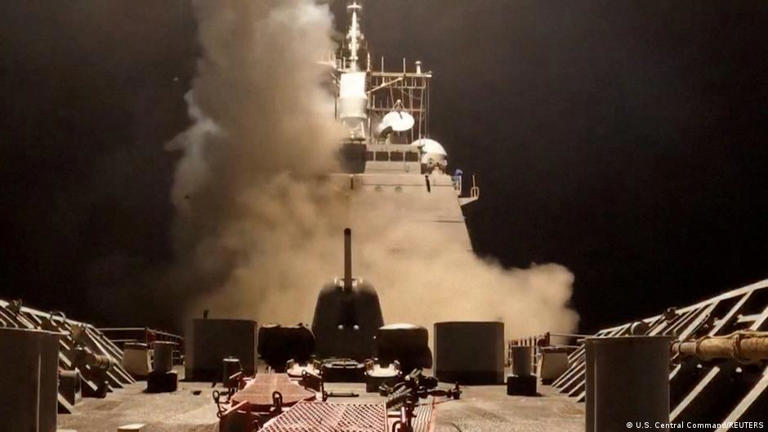
Some observers view the timing of Landau’s visit as part of a broader effort to counter shifting global power dynamics. Etse Sikanku, Dean of the School of Journalism and Media Studies at the University of Media, Arts and Communication in Ghana, explained that the U.S. is keen to reaffirm its influence in Africa amid growing Chinese presence. “There is recognition that the U.S. is losing its hold within the continent and a certain eagerness to reinsert itself into Africa’s global relationships,” Sikanku noted.
While the African Union emphasizes the potential for strategic partnerships grounded in mutual respect and shared interests, experts caution that Africa must carefully navigate these engagements. Amo-Agyemang warned, “We must be careful not to use Africa as a launching pad for great power competition.” Sikanku echoed this sentiment, urging African nations to reassess their relations with the United States “on new terms that will also benefit the continent.”
Landau’s tour highlights the delicate balance between diplomacy, security, and economic interests in the Red Sea region, with Africa increasingly positioned as both a strategic partner and a focal point of global geopolitical competition.










Comments (0)
No comments yet.
Only registered users can comment.
Sign in or create a free account to join the discussion.